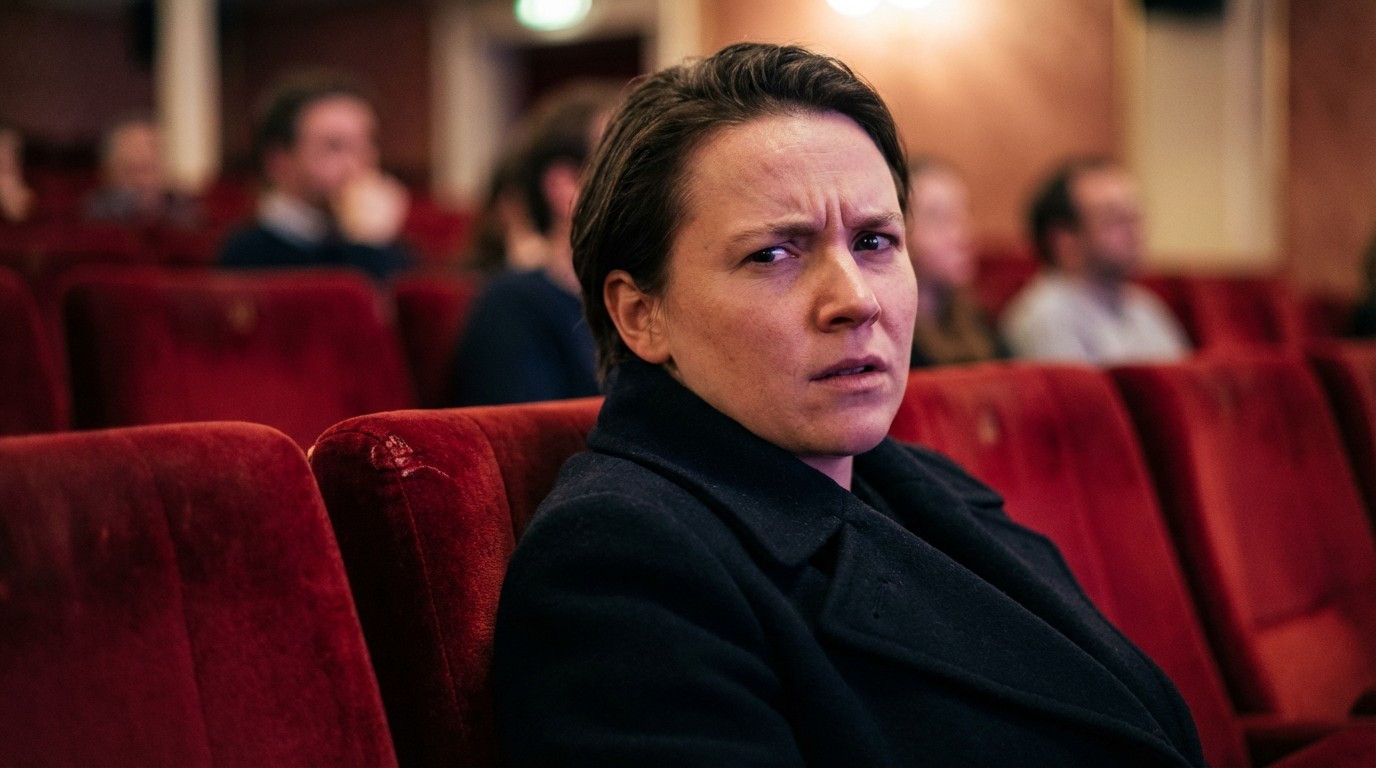
You know that uncomfortable moment in a serious drama when someone cracks a joke and half the audience laughs while the other half shifts in their seats, wondering if they’re allowed to? I’ve been in that audience. It’s a strange feeling, like the show briefly lost its footing and everyone is trying to decide whether to laugh, brace, or pretend nothing happened.
That “I’m not sure if that was supposed to be funny” moment, or worse, “I’m not sure if I’m allowed to laugh right now,” is tonal whiplash. While writing If I Could Go, I’ve been thinking a lot about why that happens. I don’t think humor in a drama is the problem. I think the issue is how the humor is doing its work, or failing to do it.
Comedy as Structure
Early on, I caught myself using the phrase “comic relief,” and then slowly stopped. It didn’t actually describe what I was writing. I do want the show to be funny. That’s part of who I am, and part of what I enjoy making. There are funny moments in this piece. They are character-driven moments, not just gags, and I’m genuinely proud of them.
What surprised me was realizing that the comedy wasn’t separate from the structure. It was part of the structure. When it’s working, it helps the story stand up instead of pulling attention away from it.
One thing humor seemed to do, especially early in the show, was build trust. It felt like a way of telling the audience, “You’re safe here. I’m not going to demand emotional buy-in before you’re ready.”
When Mister E undercuts a grand mythological idea with a wry aside, or when Jade calls out Oisín for talking nonsense, or when Oisín pokes fun at his own heroic fantasies, it eases people into the world. Those moments don’t lower the stakes. They make it possible to raise them later. Once the audience feels oriented, it becomes easier to ask them to sit with discomfort, ambiguity, or real emotional weight.
The humor also acts as a pressure valve. This is a story full of prophecies, immortal realms, romantic declarations, and very big feelings. I love that, and I’m also aware of how quickly it can tip into melodrama if left unchecked.
When the show starts drifting toward something overly operatic, a joke can pull it back just enough. A line like “Hadestown in kilts?” (delivered by Mister E. early in the first act) winks at the genre we’re playing in without dismissing it. That self-awareness keeps the emotion honest. The characters are allowed to feel deeply, and the show doesn’t insist that every intense feeling must be profound or correct. It is meant to be entertaining after all!
But, something I didn’t fully understand until later was how much the humor grounds the ethics of the story.
Jade, in particular, became a kind of moral tuning fork for me. When she laughs, it’s usually because something is ridiculous or self-serving. When she stops joking, you can feel the room change. Those shifts help the audience sense when something real is at stake, without the story stopping to explain itself.
That’s part of why characters like Jade and Mister E are allowed to stand a little closer to the audience. Jade is skeptical and unimpressed by mythic grandeur. Mister E is theatrical and aware that he’s theatrical. He knows he’s telling a story and lets us see that. That closeness creates a feeling of shared perspective. When the show later asks the audience to invest fully, it feels like a fair exchange.
One of the bigger learning curves for me has been understanding that tone isn’t just about what emotions appear onstage. It’s also about how they arrive and accumulate.
Sadness in If I Could Go seeps in gradually. The Shimmer causes grief before anyone understands it. Characters feel loss they can’t quite name. The audience senses unease long before the story explains why. When Liadan’s story finally surfaces, it gives shape to something that has already been present. That kind of layering only works if the audience feels grounded enough to notice it. Humor helps establish that baseline and provides contrast to some heavy themes, especially in act two.
I’m writing about grief, choice, love, and the harm we can cause when we decide what’s best for someone else. It’s heavy material, and I’m still figuring out how to carry it without becoming overwrought or self-serious.
What helps, for me, is letting the characters acknowledge the absurdity and danger of what they’re doing. Sometimes that comes through humor. Sometimes it comes through blunt honesty. When the jokes are rooted in real needs and tensions, they don’t soften the stakes. They sharpen them.
My hope is to invite the audience into discomfort with enough care, and occasional laughter, that they stay with the story all the way through. Thanks for reading and enjoy!